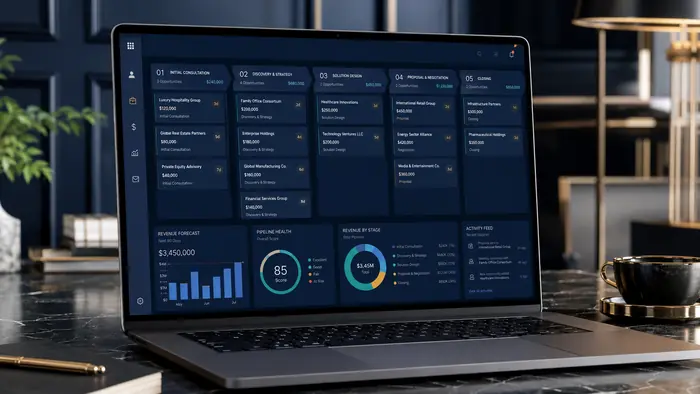
High-ticket sales usually involve longer decisions, several conversations and greater perceived risk. A CRM helps the team preserve context, coordinate follow-up and make the buying process consistent without treating every prospect like a mass-marketing contact.
The right configuration depends on the offer and customer journey. Review the foundations in our CRM software basics guide, then adapt the framework below to your sales process.
What High-Ticket Sales Need From a CRM
- Detailed lead source and qualification data
- Clear ownership and next-action dates
- Consultation scheduling and reminders
- Conversation, proposal and objection history
- A pipeline that reflects decision milestones
- Personalized follow-up with sensible automation
- Revenue, conversion and sales-cycle reporting
Example High-Ticket Pipeline
- New enquiry
- Initial contact attempted
- Qualified
- Discovery call booked
- Discovery completed
- Solution or proposal prepared
- Proposal sent
- Decision follow-up
- Won, lost or nurture
Do not create stages simply to make the pipeline look detailed. Each stage should represent a meaningful customer or sales milestone and have a defined owner, entry condition and next action.
Qualification
Collect only information that helps determine fit and readiness. Useful fields may include business problem, expected outcome, timeframe, authority, approximate budget range and current solution. Avoid turning the first form into an interrogation.
Consultations and Proposals
Connect the calendar with the CRM so confirmations, reminders and outcomes are recorded. After discovery, store a structured summary and the agreed next step. Record proposal version, value, date sent and expected decision date.
Follow-Up Automation
Automation should support personal selling, not imitate it. Use it for confirmations, internal tasks, reminders and routing. The CRM workflow automation guide explains how to use triggers, conditions and exit rules.
- Stop sequences immediately when a prospect replies
- Create tasks before important decision dates
- Notify a manager when a valuable opportunity becomes inactive
- Move unready prospects into an appropriate nurture path
- Respect consent, frequency limits and channel preferences
Reporting
Track lead-to-consultation rate, show rate, qualified rate, proposal rate, close rate, average deal value, sales-cycle length, lost reasons and revenue by source. Use these metrics to diagnose the process rather than pressure employees into meaningless activity.
Common Mistakes
- Automating too much of the relationship
- Failing to record next actions after calls
- Using vague stages such as interested
- Keeping clearly unqualified leads in forecasts
- Sending generic follow-up after a detailed consultation
- Ignoring lost reasons and sales-cycle data
Frequently Asked Questions
What CRM is best for high-ticket sales?
The best CRM supports your qualification, consultation, proposal and follow-up workflow, integrates with required tools and remains usable for the team.
How many pipeline stages should high-ticket sales use?
Use only the stages needed to represent meaningful decisions or work. Many teams begin with seven to ten and simplify after observing actual use.
Should high-ticket follow-up be automated?
Routine confirmations, reminders and tasks can be automated. Important relationship, pricing and objection conversations should remain personalized and human-led.
Which metrics matter most?
Qualification rate, consultation attendance, proposal rate, close rate, average deal value, sales-cycle length, lost reasons and revenue by source are useful starting points.
Related B2B Souq Guides
Explore an All-in-One CRM Platform
GoHighLevel may suit consultants, agencies and service businesses that want pipelines, calendars, messaging and workflows together. Test it using your real high-ticket sales process.
Affiliate disclosure: B2B Souq may earn a commission from qualifying registrations at no additional cost to you. Verify current features, pricing and offer terms on the provider’s website.